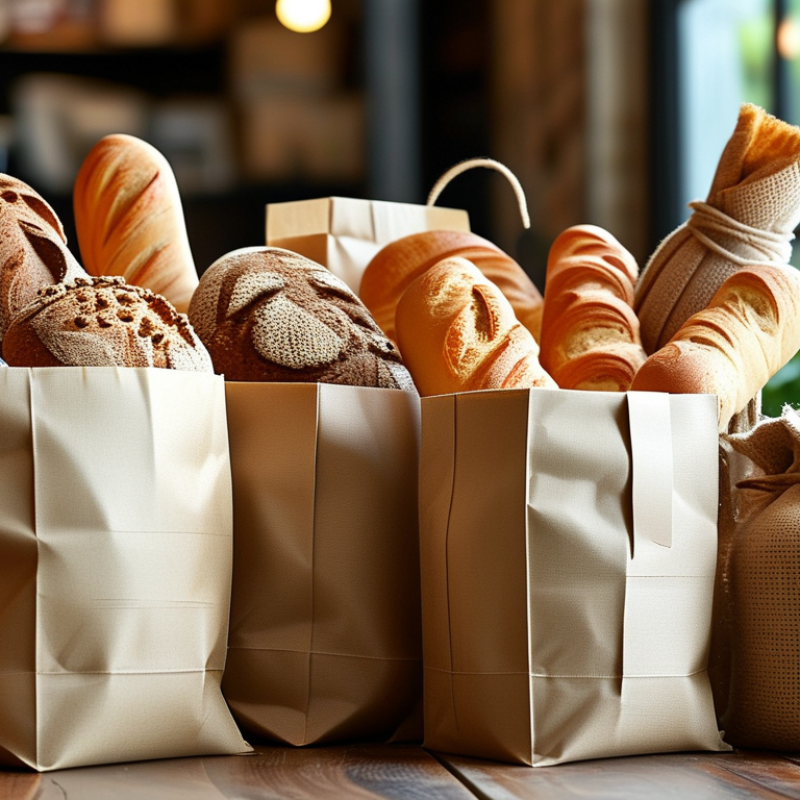
Choosing the right sacks and bags can influence product safety, shipping costs, storage efficiency, and customer satisfaction. A bakery may need breathable paper bags for fresh loaves, while a construction supplier may require reinforced woven sacks for heavy dry materials. The appearance matters, but performance matters more.
Begin with the product itself. Is it dusty, sharp, oily, moist, or sensitive to light? Measure its weight and volume before selecting a bag size. An oversized sack can waste material and increase movement during transport. A tight one may split at the seams. Closure style matters too, especially when goods face repeated handling. Drawstrings suit retail packaging, while stitched or heat-sealed openings may support stronger commercial shipments.
Material selection should follow real working conditions. Paper can offer a natural presentation, but it may weaken when exposed to moisture. Polypropylene can provide strength and flexibility, yet it may not suit every sustainability target. Recycled or recyclable options deserve careful verification, not vague marketing claims. Ask suppliers for samples, test reports, seam details, and clear performance specifications. Trust is built through evidence.
There is no perfect choice.
A useful evaluation also includes storage temperature, pallet stacking, printing quality, and delivery distance. Speak with warehouse staff and observe how bags are filled, lifted, and stored. Their practical experience often reveals failures that a product sheet misses. It is easy to focus on purchase price, then overlook replacement costs, damaged goods, or customer complaints. A thoughtful comparison helps your business choose sacks and bags that remain reliable beyond the first shipment.
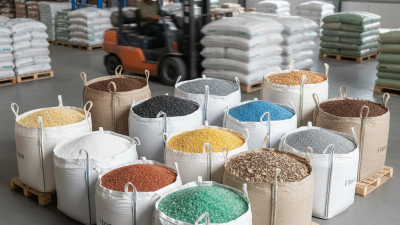
Choosing the right sack or bag starts with the product, not the price. Paper sacks suit dry goods that need printability and a natural appearance. Woven polypropylene sacks handle rough loading and outdoor storage better. Flexible polyethylene bags offer moisture resistance and efficient sealing. For bulk materials, flexible intermediate bulk containers provide high capacity with fewer handling units. Each type solves a different problem.
The OECD’s Global Plastics Outlook reported 353 million tonnes of plastic waste in 2019, while only 9% was recycled. That figure makes material selection a serious operational decision. Reusable woven sacks may reduce replacement frequency, but they need cleaning and inspection. Paper can support easier fiber recovery, yet moisture may weaken it. Compostable formats sound attractive. Their performance depends on correct industrial composting systems, which are not available everywhere.
Test before ordering thousands. Fill sample sacks, stack them, drag them across a warehouse floor, and check the seams. It matters. The FAO estimates that 13.2% of food is lost between harvest and retail, often because of handling, storage, and transport weaknesses. Better packaging cannot fix every loss, but it can reduce punctures, moisture entry, and contamination risks. A sack that looks sustainable may fail under humid loading conditions. That is the part many purchasing teams miss. Review product weight, filling speed, closure method, storage climate, reuse expectations, and end-of-life routes. Then compare total cost, not just the unit price.
Understanding the main types of sacks and bags starts with matching the package to the intended payload. The chart shows representative common payload capacities for widely used bag types.
Paper sacks and reusable fabric bags suit lighter products, while woven polypropylene sacks handle heavier goods. FIBC bulk bags are designed for large-volume industrial and agricultural materials. Actual capacity depends on bag construction, dimensions, product density, and supplier specifications.
Choosing a bag begins with the product, not the appearance. Woven polypropylene sacks suit dense materials, grains, and construction powders because they resist tearing during pallet handling. Multiwall paper bags offer stiffness and printability for dry powders. Add a polyethylene liner when humidity threatens product quality.
Data supports careful material selection. The OECD’s Global Plastics Outlook (2022) reports that packaging creates about 40% of global plastic waste. That figure should encourage lighter designs, but not careless substitution. A thinner bag can fail during transport and create more waste through damaged goods. Real warehouse trials matter.
Moisture, filling speed, load weight, and storage temperature should guide testing. The United Nations Environment Programme’s Turning off the Tap report (2023) says existing solutions could reduce plastic pollution substantially by 2040, including better reuse and recycling systems. However, recyclable construction does not guarantee local recovery. Check collection access first. A recyclable sack without a recovery route is only a hopeful label. For food, pharmaceutical, and agricultural applications, verify barrier performance, cleanliness, and traceability with qualified testing. We once treated “strong enough” as a specification. It was not. Small seams and sharp product edges changed the result.
| Product or Industry Requirement | Recommended Bag Material | Typical Construction | Key Performance Characteristics | Moisture Protection | Typical Load Range | Common Applications | Important Selection Considerations |
|---|---|---|---|---|---|---|---|
| Dry grains, flour, rice, sugar and other food powders | Multiwall kraft paper with a food-grade inner layer | Two to four paper plies, optionally combined with a polyethylene liner or coating | Good printability, stacking strength and breathability; suitable for dry filling and palletized storage | Low to moderate; an inner liner improves resistance to humidity and leakage | 10–25 kg | Food processing, agricultural products and dry ingredient distribution | Use food-contact-compliant liners where required. Paper bags are not suitable for direct exposure to rain or standing water. |
| Animal feed, fertilizer and agricultural minerals | Woven polypropylene (PP), often with an inner liner | Woven PP fabric with a sewn or heat-sealed closure; optional laminated surface | High tensile strength, puncture resistance and good handling durability | Moderate to high when laminated or fitted with a liner | 20–50 kg | Pet food, livestock feed, fertilizer and soil amendments | Choose UV stabilization for outdoor storage. Confirm chemical compatibility, closure design and required ventilation. |
| Cement, mortar, gypsum and other powdered building materials | High-strength multiwall paper with polyethylene or polypropylene reinforcement | Valve bag or open-mouth bag with multiple paper plies and moisture-resistant reinforcement | Good automatic filling performance, dimensional stability and dust-control potential | Moderate; moisture-resistant layers help protect the powder during transport | 20–50 kg | Construction materials and industrial dry-mix products | Specify a strong closure and suitable air-release characteristics to reduce dust and prevent bursting during filling. |
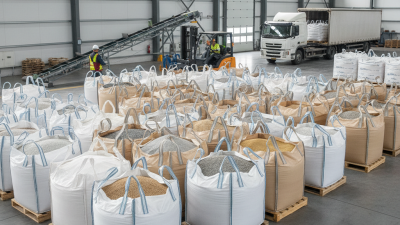
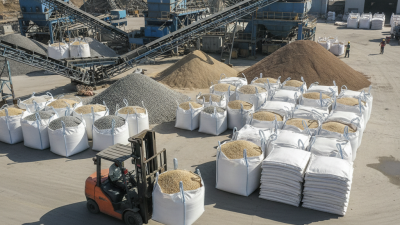
| Heavy industrial powders, aggregates and minerals | Woven PP bulk bag, also known as a flexible intermediate bulk container | Woven PP body with lifting loops, discharge spout and optional liner | High load capacity, efficient warehouse use and suitability for forklift or crane handling | Moderate to high with a liner or coated fabric | 500–2,000 kg | Minerals, chemicals, resins, aggregates and industrial powders | Check the safe working load, safety factor, lifting-loop design, filling method and discharge requirements before purchase. |
| Liquid chemicals, syrups and industrial liquids | High-density polyethylene (HDPE) or low-density polyethylene (LDPE) liner in a rigid or reinforced outer package | Flexible liner, bag-in-box format or reinforced liquid container with sealed fittings | Leak resistance, chemical compatibility and controlled dispensing | High when correctly sealed | 5–25 kg or L, depending on format | Industrial liquids, food ingredients, cleaning solutions and concentrates | Verify chemical compatibility, seal integrity, pressure limits and regulatory requirements for the specific liquid. |
| Fresh produce requiring ventilation | Woven PP, perforated polyethylene or breathable paper | Ventilated sack or bag with perforations, mesh sections or breathable construction | Air circulation, moderate strength and reduced condensation risk | Low to moderate; ventilation is prioritized over complete water resistance | 5–25 kg | Potatoes, onions, citrus fruit and other produce | Balance ventilation, abrasion resistance and protection from direct sunlight. Bag openings must not compromise product containment. |
| Moisture-sensitive powders and hygroscopic ingredients | Laminated woven PP or multiwall paper with a hermetic polyethylene liner | Outer strength layer combined with a sealed PE liner or high-barrier laminate | Improved moisture protection, puncture resistance and clean product containment | High, depending on liner thickness and seal quality | 10–25 kg | Powdered foods, specialty chemicals, additives and desiccated ingredients | Consider water-vapor transmission, oxygen sensitivity, heat-sealing requirements and storage humidity. |
| Sharp, abrasive or irregular materials | Woven PP with a reinforced base and optional inner liner | Heavy-duty woven fabric with reinforced seams, gussets or laminated surfaces | High tear and puncture resistance; suitable for rough handling | Moderate to high with lamination or an internal liner | 25–50 kg | Wood pellets, charcoal, landscaping materials and abrasive aggregates | Use reinforced stitching, appropriate fabric weight and a closure designed to withstand impact and abrasion. |
| Retail products requiring strong shelf presentation | Coated paper or printed polyethylene/polypropylene film | Flat-bottom, block-bottom, stand-up or gusseted bag with high-quality printed graphics | Good appearance, printable surfaces, convenient handling and controlled product visibility | Moderate to high, depending on coating and film structure | 0.5–10 kg | Pet food, snacks, coffee, dry foods and household products | Evaluate seal strength, opening convenience, shelf stability, graphics quality and compatibility with filling equipment. |
| Products requiring extended oxygen, aroma or light protection | Multilayer high-barrier film, often incorporating polyester, metallized film or aluminum foil | Flexible laminate with heat-sealed edges and optional resealable closure | Strong barrier against oxygen, aroma migration, moisture and light | Very high | 0.25–10 kg | Coffee, powdered beverages, sensitive foods and aroma-sensitive ingredients | Specify the required oxygen and water-vapor barrier, seal performance and protection from light exposure. |
| Reusable transport and internal logistics | Woven PP or woven high-density polyethylene (HDPE) | Durable woven body with reinforced handles, seams and optional identification panel | Reusable, washable in suitable designs, tear-resistant and economical for repeated handling | Moderate; coating may increase resistance | 10–50 kg | Returnable transport packaging, textile components and warehouse materials | Assess cleaning procedures, number of expected reuse cycles, handle strength and contamination-control needs. |
| Compostability or renewable-material objectives | Uncoated kraft paper or certified compostable film, where technically suitable | Paper sack or purpose-designed compostable laminate with compatible closure | Paper offers recyclability in appropriate systems; compostable structures require controlled end-of-life conditions | Low to moderate for uncoated paper; variable for compostable films | 1–25 kg | Dry foods, garden products and selected consumer goods | Confirm local recycling or composting infrastructure, product shelf-life needs and the required certification for environmental claims. |
| Hazardous or regulated materials | Certified multiwall paper, woven PP or composite packaging selected for the specific hazard class | Approved bag design with tested seams, liner and closure system | Controlled containment, resistance to leakage and suitability for regulated transport | Depends on the product and approved package design | Typically 5–50 kg | Hazardous chemicals, contaminated solids and regulated industrial materials | Packaging must be selected and tested according to applicable transport, labeling and product-safety regulations. |
Choosing the right sack begins with the product, not the packaging machine.
Measure product density, flowability, moisture, and expected fill weight. A 25-kilogram powder may need more internal volume than dense granules. The closure must also match handling conditions. Stitching suits many woven sacks, while heat-sealed or pinch-top designs can improve moisture protection.
According to the Flexible Packaging Association’s 2024 industry report, U.S. flexible packaging sales were roughly 40 billion dollars in 2023. That scale shows why small design decisions can affect major operating costs.
Capacity should include usable space, headspace, and safe stacking.
Overfilled bags become unstable and may burst at the corners. Underfilled bags waste pallet space and increase movement during transport. I have seen teams select sizes from catalogue charts alone. That approach often fails in humid warehouses.
Test filled samples on the actual pallet pattern. Check lifting comfort, seam strength, and drop performance. ISO 21898 testing guidance can support evaluation for flexible intermediate bulk containers, but laboratory results still need practical handling trials.
Tips:
Weigh five real fills. Record the average and variation. Then test the closure with gloves, dust, and cold hands. A fast closure is not always a secure one.
Choose a tamper-evident feature when traceability matters. Leave room for imperfect filling; production lines are rarely perfect.
Recheck the design after three delivery cycles. Your first choice may be good, but not optimal.
Choosing the right sacks and bags starts with the load, not the price tag.
Record product weight, moisture, sharp edges, stacking height, and transport distance. A bag holding dry grain needs different protection than one carrying damp produce or dense powders. Check seam strength, puncture resistance, handle performance, and closure reliability through sample testing.
Test before scaling.
Safety requires practical evidence.
Ask suppliers for material specifications, migration information, and batch traceability when packaging touches products. For bulk containers, ISO 21898 provides relevant performance requirements for flexible intermediate bulk containers. Do not assume thicker material is automatically safer. Poor stitching or unstable stacking can still cause failures. Workplace handling also matters; awkward bags increase lifting risks and damage rates.
A small trial often reveals problems that a specification sheet misses.
Sustainability should include the full service life.
The World Bank’s What a Waste 2.0 report estimates global waste could reach 3.40 billion tonnes annually by 2050 without major changes. UNEP’s 2023 Turning off the Tap report says plastic pollution could fall by 80% by 2040 through reuse, recycling, and better design. These figures support lighter designs, recycled content, and reusable formats, but only when performance remains acceptable. A bag that fails after one trip may create more waste.
Cheap is not cheap.
Compare purchase price, replacement frequency, product loss, disposal fees, and transport volume. I would also review the decision after three months, because early assumptions are often wrong.
Choosing the right sacks or bags requires more than comparing prices. Customization should match your product, filling process, and storage conditions. Specify the exact dimensions, fabric weight, closure type, handle design, and liner thickness. A small dimensional error can slow an automated filling line. Printing also needs careful review. Check color accuracy, barcode readability, ink durability, and artwork approval procedures.
Compliance must be documented, not assumed. Ask whether materials suit their intended use, especially for food, chemicals, or recycled goods. Request current test reports, material declarations, batch records, and certificates from qualified laboratories. Confirm labeling, transport, packaging-waste, and workplace-safety requirements in every destination market. Rules differ by region. A supplier’s general statement may not cover your application.
Supplier capability deserves equal attention. Review production equipment, quality-control checkpoints, sampling methods, and traceability systems. Ask for a pre-production sample and inspect seams, stitching, moisture resistance, and stacking performance. Discuss minimum order quantities, lead times, backup materials, and procedures for defective goods. Factory photos help, but an audit or independent inspection provides stronger evidence. I once focused too heavily on a low unit price; the hidden cost was inconsistent sizing. That mistake changed my evaluation checklist. Still, samples can flatter performance. Test bags under real weight, vibration, temperature, and warehouse conditions before approving large-scale production.
Copyright 2025 © Custom Packaging Products | All Rights Reserved